
#16 “Scrolling isn’t fun!”
Why do we shop online even when we say we prefer physical stores?

I asked a luxury industry expert what she would recommend to major brands in order to improve the consumer experience in e-commerce, her answer hits :
“It’s boring. We get bored! Shopping is fun. We laugh with our friends in the fitting rooms. Or we go alone and have fun. And scrolling isn’t fun.”
And yet, she sometimes shops online, like many of us, isn’it?
This contradiction is explained by by psychologist Leon Festinger (1957) with the concept of cognitive dissonance : it posits that we hardly tolerate a gap between what we believe and what we actually do; between our deep-rooted set of beliefs, our core values, and our concrete actions. To fill in that gap, we search for justifications; sometimes utilitarian, often rational and unassailable. That’s how we reduce this cognitive dissonance and get our calm back !
Consumers explain : “When you know exactly what you want to buy, you go straight online!” one says;“Anything I can avoid buying because I already know it, I prefer to buy online,” another declares.
We do claim our preference for physical stores, but we actually keep shopping online. Of course, shopping online isn’t very pleasurable, and there’s always a fear of falling into a scam, but there are still some benefits that worth to give it a try: the speed “I didn’t have time”, the convenience, “I knew exactly what I wanted”, the availability “you can find anything online”.
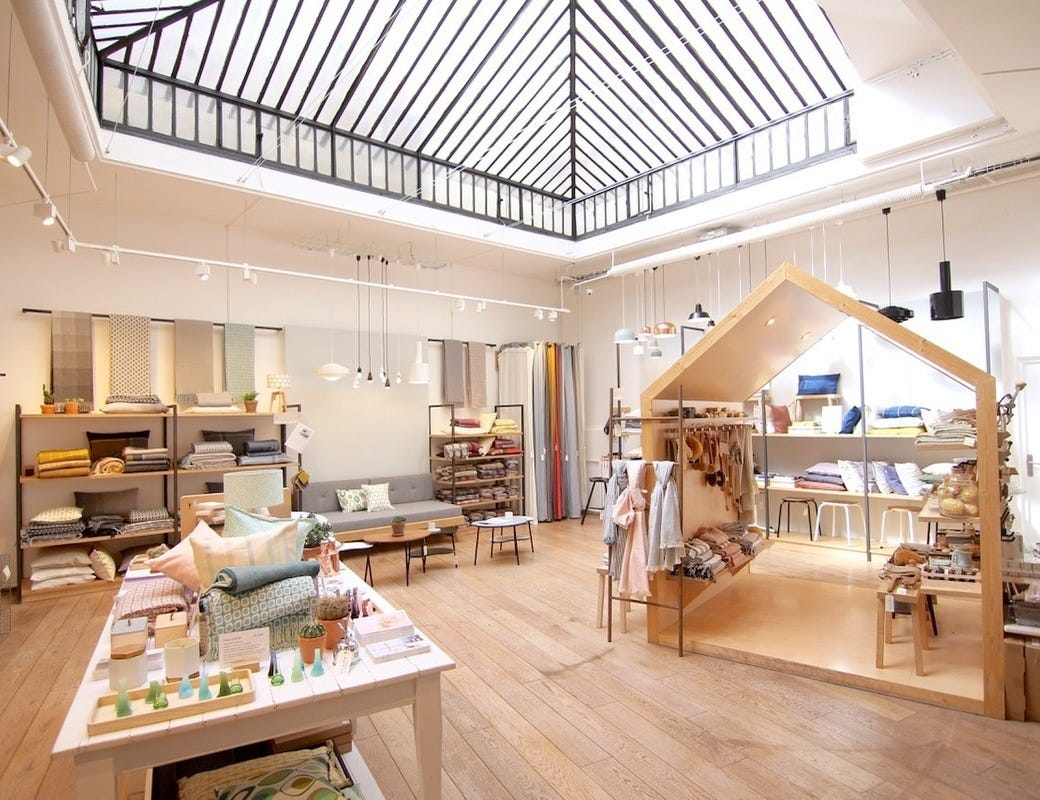
Luxury and e-commerce was seen as an oxymoron for long: luxury loves elitism and scarcity, meanwhile an online store is accessible for all, anytime. “For now, it’s products, products, and more products. There’s a big problem,” comments a luxury expert. Yet one in four fashion and luxury purchases occurs online today, a commercial trend on the rise. Chinese consumers were the first to try e-commerce for luxury goods. Now Apple customers order their new iPhone online without a hitch… physical stores are losing ground to online sales.
Chanel still refuses to sell its ready-to-wear collection online, which is quite unusual in the industry. E-commerce can’t hardly replicate the full appeal of in-store shopping experience: the joy of discovering, the chance to touch a product, the advice from a well-trained sales staff, or the ability to try on in-store.
We’ve grown accustomed to seeing very high-quality content online. The online shopping experience still seems rather basic instead…However, e-commerce has already won out in two types of shopping:
The first is utilitarian, routine shopping, a quick, low-effort transaction: I know what I want, I place my order, and it’s delivered quickly.
The second is closer to the joy of shopping: it’s the purchase of a rare item you couldn’t find anywhere else. It’s the pleasure of hunting, of browsing Vinted or Interenchères with delight, of setting alerts on multiple sites, of waiting patiently until you find it. “I know how to find special things,” proudly says a consumer. The pleasure of the hunt replaces the giggles in the fitting room!
This hunting shopping offers a clue for brands looking to make the most of the online shopping experience. Make your client wander within your e commerce content online and you may improve the shopping experience!
Physical store offers, on the other hand, an unparallel experience, as Cristina summed up in her witty comment on the last newsletter : “The combination of human interaction, service, spaces, and rituals creates something online shopping just can’t replace.”
What about you? What do you think? I love reading about your experience in the comments!
Hello, I’m Delphine and this is my newsletter “L’étoffe des marques”- the fabric of brands - I explore what makes brands unique, and how to create value for the consumer, through stories and research insights.
For curious minds, creators, and marketers.
In my newsletter #15, I talk about a fantsatic shopping experience in Tokyo, Japan.
In my newsletter #14, I discussed consumer behaviour in times of crisis,
In my newsletter #13, I talked about the story of Parisian Department stores and how they could stay relevant today,